
Bio-Oil vs Natural Scar Oil: What's the Difference?
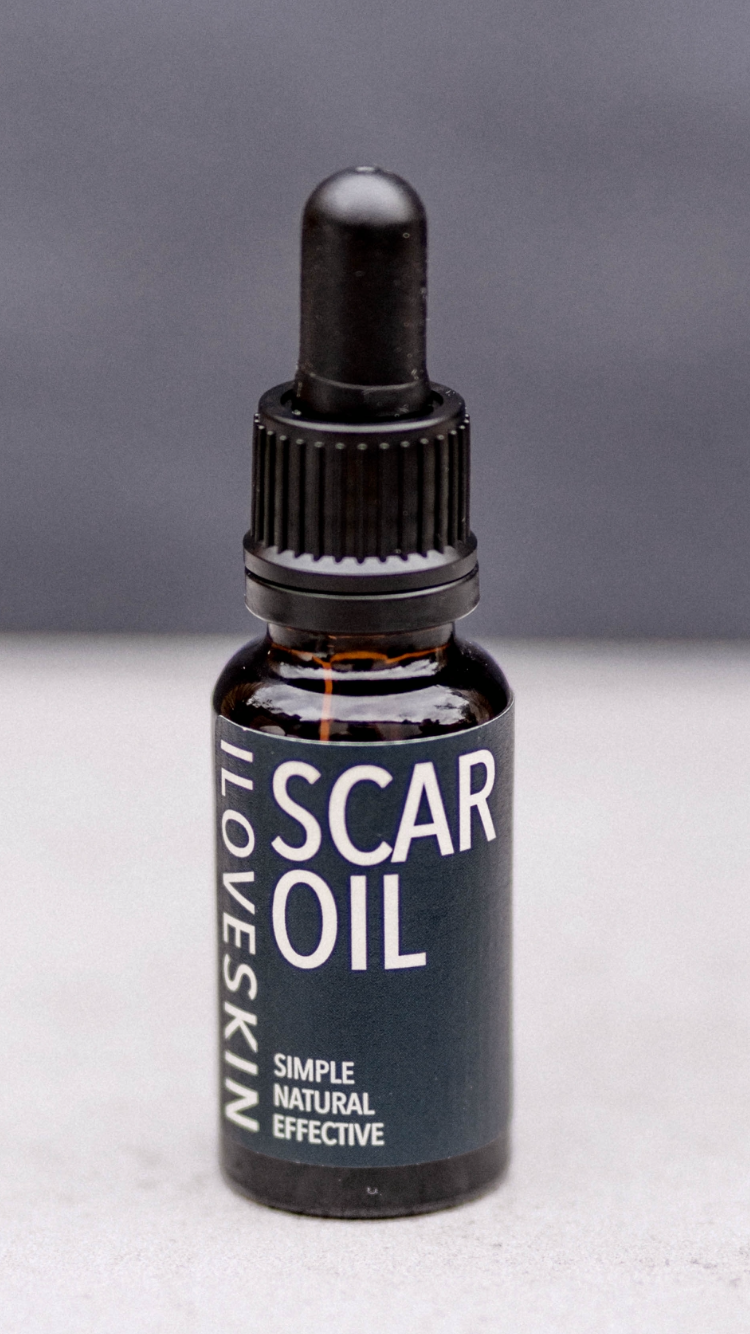
If you've searched for scar or stretch mark oil, you've almost certainly come across Bio-Oil. It's the category leader, and for good reason, it's been around for decades and it's easy to find on any pharmacy shelf. But 'well-known' and 'best fit for your skin' aren't always the same thing. Here's an honest look at how the two compare, so you can choose with your eyes open.
What's Actually in Each
Bio-Oil
Bio-Oil's formula is built around mineral oil (PurCellin Oil, a modified form) as its base, with a small percentage of plant extracts (including calendula, lavender, chamomile and rosemary) and synthetic fragrance blended in. Mineral oil is inexpensive, stable, and sits on the skin's surface, which is part of why the product spreads so easily and feels light. Mineral oil blocks your pores and acts like cling film.
ILOVESKIN Scar Oil
Our Scar Oil is built the opposite way round: a rosehip oil base, carrying CO₂ extracts of calendula, sea buckthorn, carrot and rosemary, alongside essential oils of frankincense, helichrysum, neroli, lavender, sage and vetiver, with vitamin E. There's no mineral oil and no synthetic fragrance, every ingredient is chosen because it does something, in line with our 'eat your skincare' approach of using what skin can actually recognise and use. Scar Oil provides the nutrients your skin needs for cell regeneration, allowing the skin to heal efficiently and thus reducing scar size.
How They Work, Differently
● Mineral oil forms a surface film that locks in moisture already in the skin, useful, but it isn't feeding the skin anything new.
● Rosehip oil is naturally rich in essential fatty acids and provitamin A, which skin can absorb and use as building blocks for itself.
● CO₂ extracts (calendula, sea buckthorn, carrot, rosemary) are concentrated plant actives, drawn out without heat or solvents, so more of their natural compounds stay intact and the concentrated form gives you more efficacy.
● The essential oils are specifically chosen for their cell regenerating, mark fading properties, the fact that it smells amazing is a fluke - every ingredient is chosen for efficacy.
● Synthetic fragrance (present in Bio-Oil) is a common trigger for sensitised or reactive skin, including skin that's already healing, which is often more reactive than usual. Synthetic ingredients often have a detrimental effect on the ecosystem that is your body, disrupting your endocrine system, blocking your mitochondrial function, you may not feel it immediately, but synthetic chemicals build up over time and and the effects compound.
Which Should You Choose?
If you want a widely-available, budget option and aren't sensitive to fragrance or mineral oil, Bio-Oil is a reasonable choice it's popular for a reason. If you'd rather your scar oil be built entirely from non-toxic ingredients you could recognise from a garden or a kitchen, with no synthetic fragrance and no mineral oil, that's exactly the gap we built our Scar Oil to fill.
It's also worth knowing that scar maturation is slow whichever oil you use, most scars take 6-12 months to fully mature, and up to two years in children. Consistency matters more than any single ingredient, which is exactly why we'd rather you try a small amount first and see how your skin responds, rather than commit to a full bottle on the strength of a blog post.
Frequently Asked Questions
Is natural scar oil as effective as Bio-Oil?
Both are cosmetic products designed to comfort and condition skin during the scar maturation process, neither is a medical treatment. The difference is in ingredients: Bio-Oil is mineral-oil-based with synthetic fragrance; ours is a plant-oil blend with no mineral oil or synthetic fragrance. ILOVESKIN Scar Oil is specifically designed to speed up healing and reduce scar formation, every ingredient has a purpose and it is great any time the skin is damaged from surgery to acne and every little cut or scrape ion between.
Will a natural scar oil irritate sensitive or healing skin?
Removing synthetic fragrance and mineral oil tends to suit sensitive or reactive skin better, though everyone's skin is different, which is exactly why we'd recommend patch testing and trying a sample vial before a full-size bottle.
How soon can I start using scar oil on a healing wound or C-section scar?
Only once the skin is fully closed, you can start applying scar oil - consistency is key.
How long does it take to see a difference?
Scar maturation typically takes 6-12 months (up to two years in children), so consistent use over several months, not days, is what matters most. People have noticed a reduction in redness overnight, some take longer - everyone is different and healing is not simply about applying something topically. Nutrition, rest (repair), hydration, stress, circulation all play a part in healing.


Comments